We bring people together through stories of humanity, culture, family, and connection, building a global community where women feel heard, understood, and welcome.


As Featured on Apple Podcasts
New Shows · November 2026
All Episodes

Latest Episodes

All Episodes →
#10

Perimenopause: You're Not Being Heard. Now What? | Part 3

Perimenopause: You're Not Being Heard. Now What? | Part 3 What happens when you know something is changing in your body, but your doctor tells you everything is normal? Your blood work comes back within range. You're told you're just getting older. And somehow, you leave the appointment with more questions than answers, wondering whether you should have brought up your concerns in the first place. You shouldn't need a medical background to be taken seriously when it comes to your own health. In this final episode of our three-part perimenopause series, we're talking about something that deserves far more attention: how women can advocate for themselves, find healthcare providers who listen, and navigate the medical system with greater confidence. I'm sharing a conversation I had with my nursing supervisor, a registered nurse who experienced what so many women describe: feeling dismissed despite knowing that something in her body had changed. As a nurse with more than 20 years of healthcare experience, that conversation stayed with me. If women who work in healthcare sometimes struggle to have their concerns addressed, what happens to women who don't know the medical terminology, don't understand their lab results, or don't know which questions to ask? This episode isn't about blaming doctors or assuming every symptom is caused by hormones. It's about building a better partnership between women and their healthcare providers, understanding our options, and recognizing that our experiences deserve thoughtful attention. In this episode, we discuss: Finding the right healthcare provider: How to use your insurance directory, research provider specialties, and ask whether a doctor has experience treating perimenopause and menopause. What to do when healthcare options are limited: Navigating care when specialists, insurance coverage, or additional providers aren't readily available. Preparing for your doctor's appointment: Tracking symptoms, menstrual changes, sleep disturbances, and the ways symptoms affect your everyday life. Normal hormone levels during perimenopause: Why a single blood test may not tell the whole story and why your symptoms and menstrual history matter. When symptoms may have another cause: Understanding why thyroid conditions, anemia, sleep disorders, medications, and other health concerns may need evaluation. Understanding treatment options: Asking about the potential benefits, risks, and alternatives to hormone therapy, nonhormonal treatments, and lifestyle changes. How to advocate for yourself without feeling difficult: Asking questions, requesting clarification, understanding your results, and seeking a second opinion when appropriate. Leaving your appointment with a plan: Three important things every woman should understand before walking out of the examination room. We also talk about something deeply personal: learning to see aging differently. Perimenopause isn't simply about managing symptoms. It's also an opportunity to become more aware of our health, think about the years ahead, and begin caring for ourselves in ways we may have overlooked. We don't need to fight against getting older. We deserve to feel supported, informed, and capable of continuing to do the things we love. Not because we're trying to hold on to the women we used to be, but because we want to take care of the women we are becoming. Free perimenopause resources I've created free resources to help you take what we've discussed throughout this series into your own healthcare appointments. Visit The House of Noor Resource Library and select Women's Health and Perimenopause to find symptom-tracking tools, healthcare provider guides, and resources for women in the United States and internationally. You'll also find my new free printable, Finding Your Voice, a practical question sheet designed to help you prepare for appointments, organize your concerns, ask meaningful questions, and keep track of your follow-up plan. You can view the guides directly online without downloading them. For women who want additional support, the Perimenopause Advocacy Toolkit is also available. A final thought Is there something you've been experiencing that you've been putting off addressing? Something you've told yourself is simply part of getting older? Maybe this is the week you begin tracking your symptoms, look into your healthcare options, or make that appointment you've been postponing. You don't need to know exactly what's wrong before you deserve to be heard. And you don't have to figure everything out alone. If this conversation resonates with you, consider sharing the series with another woman. Sometimes hearing someone else's experience helps us recognize something in our own lives. Thank you for joining me for this three-part conversation. A return to simple things. Explore The House of Noor Website and free resources: https://thehouseofnoor.co Listen and follow the podcast: https://feeds.transistor.fm/the-house-of-noor YouTube: https://www.youtube.com/@thehouseofnoor Leave a Note: Visit our website to share a private note with me. Medical disclaimer This podcast is intended for general educational and informational purposes and does not replace individualized medical advice, diagnosis, or treatment. Please discuss your symptoms and healthcare decisions with a qualified healthcare professional. Seek urgent or emergency medical care when appropriate. Music licensed through Soundstripe. Code: GKA15CMDTWZUGIAC
#3

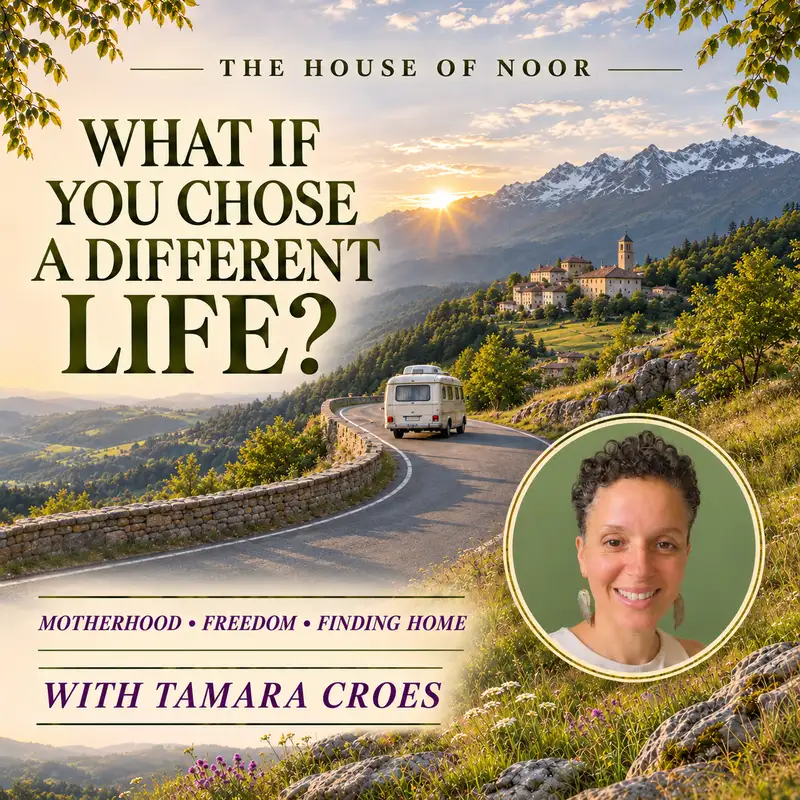
What If You Chose a Different Life? / Motherhood, Freedom & Finding Home with Tamara Croes

If you could start your life over tomorrow, without the expectations of family, society, or anyone else, would you choose the life you're living right now? It's a question many of us rarely stop to ask. In this episode of The House of Noor, Meara sits down with Tamara Croes, a mother of five, grandmother, former aerospace engineer, and woman whose journey has taken her family across countries and toward a very different way of living. Tamara's story begins with a difficult childhood and a determination to create a different future. What followed wasn't a straight path. There was university, motherhood, a career in aerospace engineering, unexpected changes, and eventually the realization that the life she had worked so hard to build wasn't necessarily the life she wanted to continue living. Today, Tamara and her family are creating a new chapter in South America, where they're exploring what it means to live, learn, work, and grow together on their own terms. But choosing a different life doesn't mean leaving every difficulty behind. In this conversation, we explore: Growing up with difficult experiences and discovering that life can look different from what we've always known. The expectations society places on education, careers, parenting, and success. Raising children in two different stages of motherhood and recognizing what changes as we grow older. Homeschooling, unschooling, and allowing children to explore their natural curiosity. Moving between countries, embracing uncertainty, and learning what freedom actually requires. The emotional reality of having adult children and grandchildren living far away. Building a life around family, personal values, and meaningful connections. Why home isn't necessarily a house, a country, or a permanent address. Creating welcoming communities where people can share experiences and ask questions without fear of judgment. One of the most meaningful parts of our conversation comes when Tamara reflects on simply watching her children, taking in those ordinary moments that seem so small until we realize how quickly they pass. As mothers raising children in different stages of life, we share some honest reflections about the things we did when we were younger, the expectations we once carried, and what we hope our children will remember. This isn't a conversation about convincing anyone to abandon their career, move to another country, or homeschool their children. It's about recognizing that there are many ways to build a meaningful life. We don't have to make the same choices, agree with every decision, or want the same future to learn something from another person's experiences. Sometimes, simply hearing how someone else lives gives us the opportunity to question something we've always taken for granted. And perhaps that's where meaningful change begins. Connect with Tamara Croes Learn more about Tamara, her family's journey, and the projects they're developing through Caminda di Croes. Website: https://www.camindadicroes.earth Join the Conversation What does freedom mean to you? Have you ever questioned whether the life you're living is the one you truly want? I'd love to hear your thoughts. If this conversation resonates with you, consider sharing it with someone who might appreciate a different perspective. Follow The House of Noor on your favorite podcast platform for new conversations about intentional living, family, practical wisdom, and the things that bring us together. Connect with The House of Noor Website: https://thehouseofnoor.co Explore our podcast, free resources, and practical inspiration for intentional living. The House of Noor — A Return to Simple Things. Until next time, take care of yourselves and one another.
#9

What’s Actually Happening Inside: Perimenopause Symptoms Nobody Talks About | Part 2

We learn about puberty, periods, and pregnancy. But how much are we taught about the changes that come afterward? In Part Two of Nobody Told Me About Perimenopause, Meara takes a closer look at hormones, unexpected symptoms, and the everyday changes that can leave women wondering why their bodies suddenly feel unfamiliar. From waking up drenched in sweat to struggling to find a familiar word, this conversation makes room for the experiences we don’t always know how to explain and the questions we may feel uncomfortable asking. Meara shares her experiences with dry eyes, brain fog, bladder leakage, palpitations, changing energy, and paying closer attention to her health. Along the way, she explores why understanding perimenopause also means thinking about our muscles, bones, mobility, and independence in the years ahead. This episode is an invitation to learn, notice changes, and ask for support without feeling ashamed or pressured to handle everything at once. In this episode: • Estrogen, progesterone, and changing hormone patterns • Night sweats, unpredictable periods, and changes in intimacy • Dry eyes, memory lapses, and difficulty concentrating • Pregnancy, pelvic floor health, and stress urinary incontinence • Palpitations and why new or worsening symptoms need evaluation • Knowing your usual blood pressure and keeping useful records • Coffee, sleep disruption, and persistent exhaustion • Weight changes, protein, and balanced nutrition • Building and maintaining strength as we age • Bone health, osteoporosis, and screening conversations • Hormone therapy, nonhormonal options, and individual treatment decisions • Small, manageable ways to begin caring for yourself At the heart of this conversation is a personal question: What do we want our bodies to be able to do ten, twenty, or thirty years from now? For Meara, that means being able to carry groceries, climb stairs, get up from the floor, and keep participating in the life she enjoys. Taking care of ourselves today can include thinking about that future, alongside getting help for what we’re experiencing now. Free resources mentioned in this episode Visit The House of Noor Resource Library and select Women’s Health & Perimenopause. You’ll find: • A free symptom checklist and seven-day tracker • Finding Your Partner in Care, a guide to finding menopause-focused healthcare professionals in the United States • An international guide to finding menopause-focused care • Educational resources and information about symptom-tracking apps For women who would like additional support, the $20 Perimenopause Advocacy Toolkit includes further educational information, appointment-preparation worksheets, and thirty days of printable symptom tracking. You do not need to purchase anything to begin. The free resources are available to help you start noticing patterns and preparing questions for your healthcare provider. Next in the series Part Three focuses on advocating for ourselves in healthcare: preparing for appointments, explaining symptoms, asking questions, and deciding what to do when our concerns haven’t been addressed. Follow The House of Noor wherever you listen so you don’t miss the final conversation. If this episode brings someone to mind, consider sharing it with her. Connect with The House of Noor Explore the podcast and resources at thehouseofnoor.co. The House of Noor — A Return to Simple Things. Health information Although Meara is a licensed practical nurse, this episode is for education and conversation. It is not a diagnosis, personal medical advice, or a substitute for care from your healthcare professional. Symptoms can have causes other than perimenopause. New, persistent, or concerning symptoms should be evaluated rather than assumed to be hormonal. Music credit Music licensed through Soundstripe. Code: GKA15CMDTWZUGIAC
#2

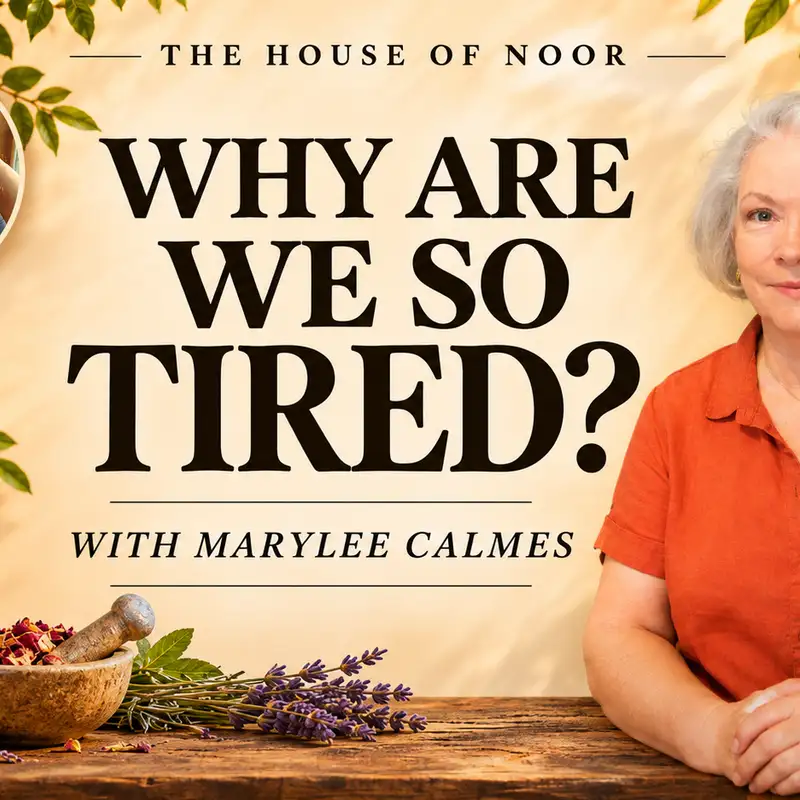
Why We're So Tired / Rest, Seasonal Living & Traditional Chinese Medicine with MaryLee Calmes

Why We're So Tired: Rest, Seasonal Living & Traditional Chinese Medicine with MaryLee Calmes When did we become so busy that even resting makes us feel guilty? We've created a world where we can work, shop, eat, and entertain ourselves around the clock. But somewhere along the way, have we lost touch with the natural rhythms that once shaped our everyday lives? In this episode of The House of Noor, Meara sits down with MaryLee Calmes, a Traditional Chinese Medicine practitioner with more than 30 years of clinical experience and founder of Living in the Season. After struggling with chronic illness in her thirties, MaryLee began exploring Traditional Chinese Medicine, an experience that transformed her personal life and eventually led her into a new career. Together, we explore what the changing seasons can teach us about rest, slowing down, and living more intentionally. We talk about why modern society rewards constant productivity, how artificial lighting and technology have changed our daily routines, and why something as simple as allowing ourselves to rest can feel so difficult. MaryLee shares her experiences with traditional Chinese approaches to wellness, while Meara brings her own perspective as a nurse, mother, and homeschooler. In this conversation, we explore: Why we often feel guilty when we're not being productive. What seasonal living means and how it connects to traditional wisdom. How artificial lighting, screens, and modern conveniences influence our routines. The importance of rest and recognizing when we need to slow down. Traditional Chinese Medicine's perspective on nutrition, movement, and everyday well-being. Creating calmer family routines and making time for outdoor play. Why small, intentional changes can be more manageable than trying to change everything at once. The importance of asking questions and advocating for ourselves when seeking healthcare. You don't need to live on a homestead, completely change your schedule, or give up modern conveniences to begin living more intentionally. Sometimes, a return to simple things begins with noticing what's already around us. Connect with MaryLee Calmes MaryLee is the founder of Living in the Season, where she shares resources about seasonal living and Traditional Chinese Medicine. Website: https://livingintheseason.com/ Connect with The House of Noor Website: https://thehouseofnoor.transistor.fm/ YouTube: https://www.youtube.com/@thehouseofnoor If this conversation resonates with you, consider following The House of Noor and sharing this episode with someone who could use a reminder that it's okay to slow down. The House of Noor — A Return to Simple Things. Health & Wellness Disclaimer This episode explores personal experiences, traditional wellness practices, and perspectives on health. The views shared are those of the individual speakers and are provided for educational and informational purposes only. Traditional Chinese Medicine concepts discussed in this episode should not be interpreted as universally established medical facts or guaranteed treatments. Nothing in this episode is intended to diagnose, treat, cure, or prevent any medical condition or replace professional medical advice. Always consult a qualified healthcare professional before making changes to medications, treatments, or healthcare routines.
#8

Nobody Told Me About Perimenopause / A Three-Part Series on Understanding Our Bodies and Aging with Grace

What if the changes you've been noticing in your body are part of a transition nobody ever prepared you for? Weight gain, heart palpitations, dry eyes, sleep disturbances, changing menstrual cycles, and feeling unlike yourself can leave you wondering what's happening. For many women, understanding perimenopause doesn't begin until years after they've started noticing changes. Welcome to The House of Noor — A Return to Simple Things. In this episode, Meara begins a three-part series exploring perimenopause, women's health, hormonal changes, healthy aging, and learning to care for our changing bodies with knowledge and grace. As a mother, grandmother, and nurse, Meara shares her personal experience of noticing changes in her body around age 36, while pregnant with her third child. Through pregnancy, childbirth, raising children, and navigating everyday life, she began questioning the physical changes she was experiencing. But how much do we really understand about our bodies as we approach midlife? And why do we so often dismiss symptoms as simply getting older? This conversation explores possible early signs of perimenopause, why symptoms differ between women, and the importance of understanding that not every change is necessarily caused by hormones. But this episode isn't only about physical symptoms. It's also about changing the way we think about aging. Why do women feel so much pressure to maintain the bodies they had twenty years ago? Why do we treat gray hair, weight changes, and growing older as things we need to fight? And what would happen if we started appreciating the women we're becoming while still taking responsibility for our health? Meara reflects on accepting her gray hair, learning to be kinder to herself, and why caring for our muscles, bones, mobility, and independence becomes increasingly important as we age. Because healthy aging isn't simply about how we look. It's about what we want to continue doing ten, twenty, and thirty years from now. 🌿 IN THIS EPISODE What is perimenopause, and how is it different from menopause? When can perimenopause begin? Early signs and symptoms women may experience Hormonal changes and why every woman's experience is different Weight gain and body composition changes during midlife Why heart palpitations, dry eyes, and other symptoms deserve medical attention Understanding the difference between natural aging and possible health concerns Learning to accept gray hair and physical changes Why aging with grace doesn't mean ignoring our health The importance of muscle strength, bone health, balance, and mobility Maintaining independence as we grow older Tracking symptoms and recognizing patterns Preparing for productive conversations with healthcare professionals Caring for our changing bodies without shame or criticism 🌿 ONE SMALL THING YOU CAN START TODAY Begin paying attention to your body's patterns. Have your menstrual cycles changed? Are you sleeping differently? Have you noticed changes in your mood, energy, weight, or overall well-being? Start keeping a simple record. You can use a notebook, calendar, or symptom-tracking app to document what you're experiencing, when symptoms occur, and how they affect your everyday life. Over time, you may begin recognizing patterns you hadn't noticed before. This information can also help you communicate more effectively with your healthcare provider. You don't need to diagnose yourself, and you shouldn't delay medical care for new or concerning symptoms. The goal is to become more informed about your own health. 🌿 ABOUT THIS THREE-PART SERIES Nobody Told Me About Perimenopause: Understanding Our Bodies and Aging With Grace Part 1 — Nobody Told Me About Perimenopause Early signs, personal experiences, understanding our changing bodies, and learning to approach aging with knowledge and grace. Part 2 — What's Actually Happening to Our Bodies? A closer look at hormones, changing body composition, muscle strength, bone health, and the importance of preparing our bodies for healthy aging. Part 3 — Learning to Live With a Changing Body Recognizing patterns, preparing for medical appointments, advocating for ourselves, asking informed questions, and finding knowledgeable healthcare professionals. 🌿 HELPFUL WOMEN'S HEALTH RESOURCES American College of Obstetricians and Gynecologists — Menopause Symptom Tracker https://www.acog.org/womens-health/health-tools/menopause-symptom-tracker The Menopause Society — Patient Education https://menopause.org/patient-education ACOG — The Menopause Years https://www.acog.org/womens-health/faqs/the-menopause-years These resources provide educational information to help women better understand the menopause transition and prepare for conversations with healthcare professionals. 🌿 CONTINUE THE CONVERSATION WITH THE HOUSE OF NOOR The conversation doesn't have to end when the episode does! The House of Noor is about bringing women together from different cultures, backgrounds, and walks of life to share experiences, exchange knowledge, support one another, and build meaningful connections. Whether you're navigating perimenopause, raising a family, learning new skills, or simply questioning the way we live today, you're welcome here. 💛 Follow The House of Noor on Facebook Stay connected, discover new episodes, and share your thoughts. https://www.facebook.com/profile.php?id=61595860880154 🌿 Join Our Private Facebook Community A welcoming space for women to connect, share their experiences, ask questions, and become resources for one another across the world. https://www.facebook.com/share/g/1CcuiaDAHt/ Different backgrounds. Different experiences. One shared humanity. 🌿 ABOUT THE HOUSE OF NOOR The House of Noor — A Return to Simple Things is a podcast about intentional living, home, family, natural wellness, personal growth, traditional wisdom, and finding meaning in everyday life. Hosted by Meara, the show features honest personal reflections and relaxed kitchen-table conversations with women from different cultures, backgrounds, and walks of life. Our hope is to create a welcoming gathering place where we can learn from one another, share practical knowledge, build friendships, and discover ways to live with greater intention. No perfect lives. No perfect routines. Just real experiences, meaningful conversations, and a return to the things that matter. 🎙️ Listen to The House of Noor https://thehouseofnoor.transistor.fm/ ▶️ Watch on YouTube https://www.youtube.com/@thehouseofnoor 🌿 A QUESTION FOR YOU What is something you wish someone had told you about perimenopause or getting older? Have you experienced changes in your body that you weren't prepared for? I'd love to hear your story. Sometimes, simply sharing our experiences can help another woman feel less alone. MEDICAL DISCLAIMER This episode shares personal experiences and general educational information. Although Meara has a nursing background, this podcast does not provide individualized medical advice, diagnosis, or treatment. Symptoms associated with perimenopause can overlap with other medical conditions. New, persistent, worsening, or concerning symptoms including heart palpitations and changes in vision should be evaluated by an appropriate healthcare professional. Always discuss medical concerns and treatment decisions with your healthcare provider. MUSIC CREDIT Music licensed through Soundstripe. License code: WI5D6O2BADK97BID "We're not trying to turn back the clock. We're trying to understand the bodies we're living in today and care for the women we're becoming." — Meara, The House of Noor